
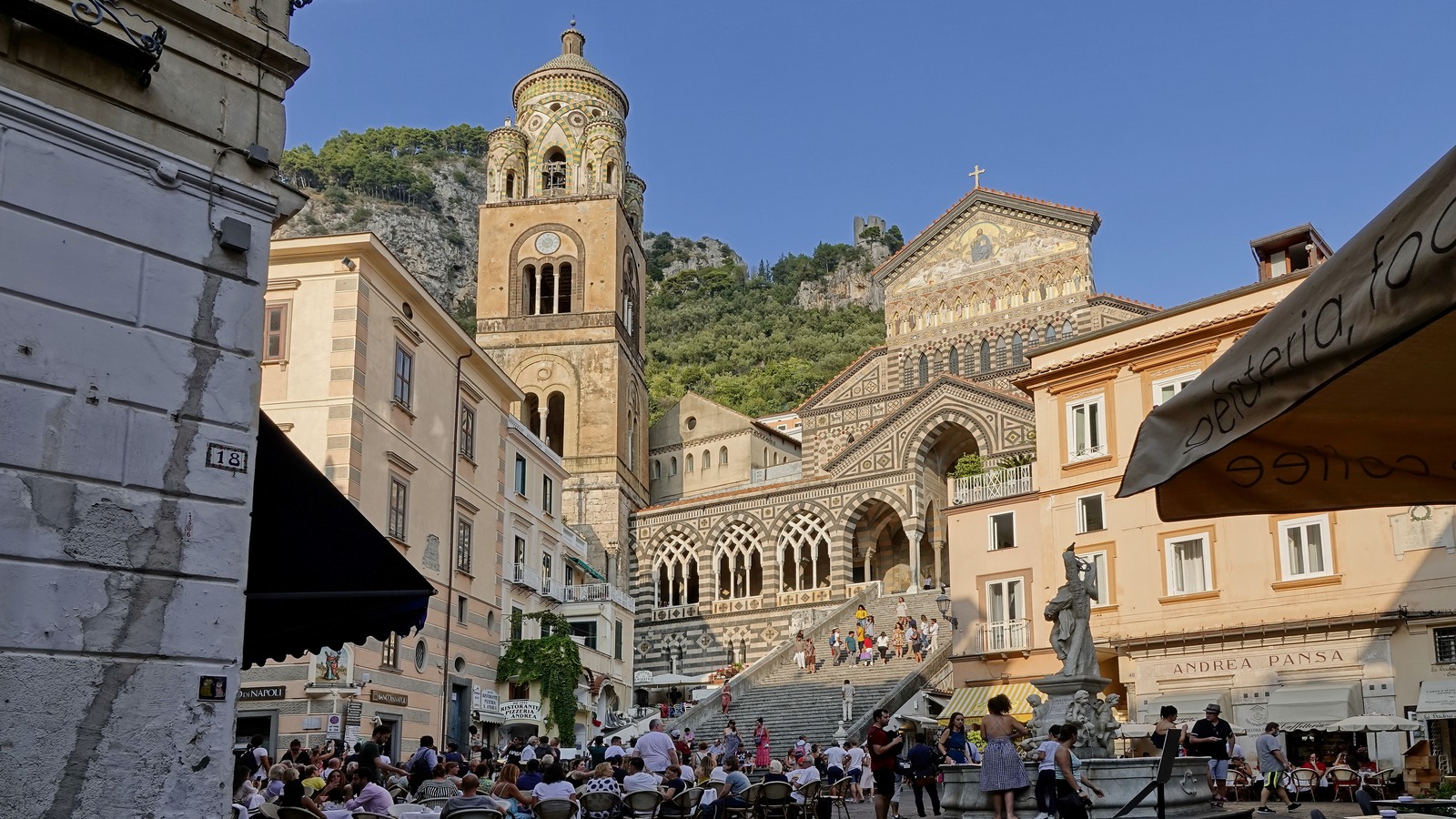
Amalfi is a small town wedged into a ravine, so almost everything worth seeing sits within ten minutes of Piazza Duomo and the rest is reached on foot, by boat or by bus. Give the cathedral complex and the paper mills a morning, keep the afternoon for the water, and treat Ravello and the valley as separate half days rather than add ons.
The top 13, ranked
Ranked by how consistently each pick appears across official Amalfi sources, the local destination marketing organization, and recent independent roundups.
- Top pick
 #1Best for History · #1 of 13
Cathedral of Sant'Andrea
Historic SitePiazza Duomo and the old townOpen daily with a seasonal pattern, and access is limited during Mass and on major religious feast daysFree with paid optionsSixty two steps climb from the square to a striped facade of neo Moorish arches and gold mosaic, rebuilt in the nineteenth century after the original front collapsed. Inside are bronze doors cast in Constantinople in 1060 and a crypt holding the relics of Saint Andrew, brought back from the Fourth Crusade in 1208 and still the reason the town keeps its patronal feast.
Local tipThe staircase is the single best vantage point in Amalfi and it empties out in the early morning and after the day boats leave, which is when the facade photographs cleanly.
- Top pick
 #2Best for Architecture · #2 of 13
Cloister of Paradise and the Diocesan Museum
MuseumPiazza Duomo and the old townOpen daily on a seasonal timetable with shorter winter hours, and the circuit runs in one direction onlyTicketedBuilt in the 1260s as a burial ground for Amalfi's noble families, the cloister rings a garden of palms with slender paired columns and interlaced pointed arches that owe more to North Africa than to Italy. The ticketed route continues through the ninth century Basilica of the Crucifix, now the diocesan museum of reliquaries and silver, and down into the crypt.
Local tipThe complex has its own entrance to the left at the top of the cathedral steps, and the one ticket covers the cloister, the basilica museum and the crypt in a fixed one way circuit.
- Top pick
 #3Best for Crafts · #3 of 13
Museo della Carta, the Paper Museum
MuseumValle dei Mulini and the upper valleyOpen daily through the main season with reduced days in deep winter, and entry is by timed guided tourTicketedAmalfi made cotton rag paper from the thirteenth century, and this mill on Via delle Cartiere still has its stone vats, wooden hammers and water wheel in working order. Guides run the machinery, pull a sheet in front of the group and explain how bambagina paper was traded across the Mediterranean long before the mills upstream fell derelict.
Local tipVisits are guided rather than self led and the mill is cold and damp even in August, so take a layer and allow time for the short walk up from the cathedral.
-
 #4Best for Hiking · #4 of 13
Valle delle Ferriere and the Valley of the Mills
ParkValle dei Mulini and the upper valleyThe lower valley trail is open year round in daylight, and the protected core is by prior arrangement onlyFree with paid optionsThe ravine behind the town climbs past roofless paper mills into a state nature reserve of 450 hectares where the damp microclimate supports Woodwardia radicans, a giant fern that survives here as a relic of a much older climate. Waterfalls, an ironworks arch over the stream and near constant shade make it the coolest walk on this stretch of coast.
Local tipThe lower valley path from Amalfi is open to anyone, while the strict reserve core is entered only by arrangement with the Comune di Scala, so plan around which section you actually want.
-
 #5Best for Swimming · #5 of 13
Marina Grande and the Amalfi beaches
ParkThe waterfront and the harborOpen to the public year round, with lido concessions, sunbed hire and beach bars operating only in the warm monthsFree with paid optionsThe town beach sits directly below the promenade, a band of dark grey shingle split between free public stretches and lidos renting loungers by the row. It is the most convenient swim on the coast rather than the prettiest, backed by the harbor wall and close enough that you can leave the water and be in Piazza Duomo in five minutes.
Local tipFree sections fill by mid morning in high summer, and the quieter alternative is Spiaggia del Duoglio, reached by around four hundred steps down from the coast road west of town or by shuttle boat.
-
 #6Best for Wandering · #6 of 13
Atrani
Neighborhood LandmarkAtrani, Ravello and the coast roadOpen at all times as a working village, with the beach busiest in the afternoons through summerFreeOne of the smallest municipalities in Italy occupies the next inlet east, a stack of whitewashed houses and covered stairways around a piazza that opens straight onto its own beach. The domed church of San Salvatore de Birecto once crowned the doges of Amalfi, and because coach parties rarely stop, the village keeps a working rhythm the main town has lost.
Local tipWalk it rather than drive it, either through the road tunnel or on the higher stepped path from Amalfi, which takes about fifteen minutes and gives far better views over both bays.
-
 #7Best for History · #7 of 13
Arsenale della Repubblica and the Compass Museum
MuseumThe waterfront and the harborOpen on a seasonal timetable and occasionally closed to the public when the hall is booked for civic ceremoniesTicketedTwo aisles of tall stone arches survive from the medieval shipyard where Amalfi built the galleys of its maritime republic, and the hall once ran twice as long before storms took the seaward half. It now holds the Museum of the Compass and the Maritime Duchy, with navigation instruments, the maritime code of Amalfi and the costumes of the historic regatta.
Local tipIt stands at the base of the seafront by Piazza Municipio, so it slots neatly into a wet afternoon or the gap before a ferry departure.
-
 #8Best for Coast views · #8 of 13
The Amalfi Coast ferry from the town pier
TourThe waterfront and the harborRuns frequently through the warm months, reduces heavily in winter, and is cancelled outright in rough seasTicketedAmalfi is the hub of the coastal ferry network, with fast boats running west to Positano and Capri and east through Minori, Maiori and Cetara to Salerno. The sea route avoids the hairpins and the bus queues entirely, and the view back at the town stacked into its cleft is the one most people remember from the whole trip.
Local tipSailings are weather dependent and thin out sharply outside the warm months, so treat the ferry as the plan for good days and keep the SITA bus as the wet weather fallback.
-
 #9Best for Something different · #9 of 13
Grotta dello Smeraldo
ParkAtrani, Ravello and the coast roadOpen daily in fair weather on a seasonal timetable, and closed at short notice in rough seasTicketedA flooded karst cave at Conca dei Marini glows green when daylight enters through a submerged opening and refracts up through the water. Rowing boats take small groups on a circuit of about half an hour past stalactites that reach the surface and a ceramic nativity scene sunk on the cave floor, a few minutes west of Amalfi by road or boat.
Local tipReach it by boat from the Pennello pier or by SITA bus to the cliffside lift, and accept that it closes without warning whenever the swell picks up.
-
 #10Best for Gardens · #10 of 13
Villa Rufolo in Ravello
GardenAtrani, Ravello and the coast roadOpen daily year round with shorter winter hours, and parts of the garden are closed off when the concert stage is being builtTicketedRavello sits about four hundred meters above Amalfi, and the thirteenth century Rufolo estate is the reason most visitors climb up. Moorish cloisters and a squat tower museum open onto terraced gardens that drop away to the Gulf of Salerno, a view Wagner used as the model for Klingsor's magic garden and that still hosts the summer concert season.
Local tipThe SITA bus up from Amalfi takes around twenty five minutes on a road of tight hairpins, and the last stretch into Ravello's center is pedestrian only, so allow for the walk.
-
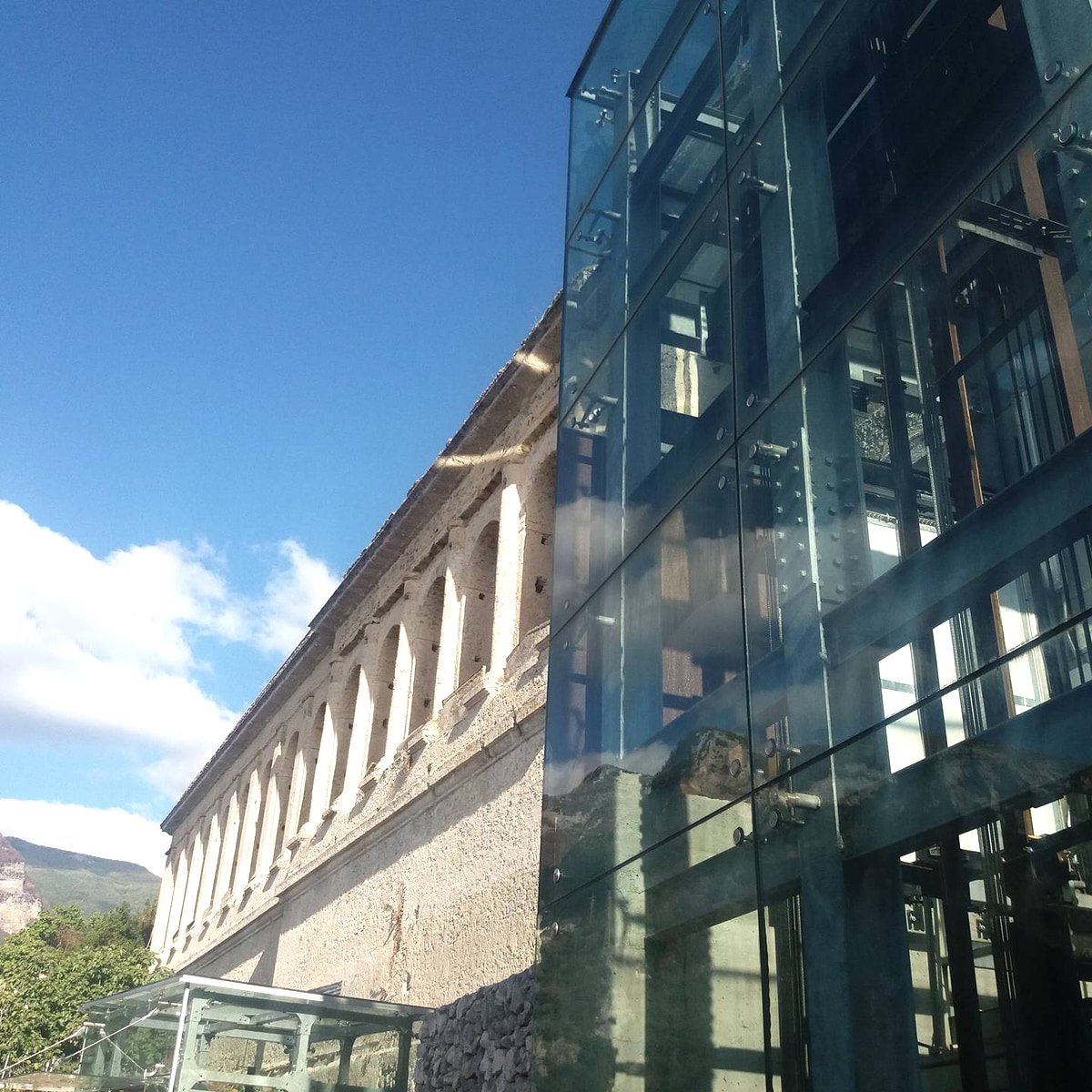 11Best for Views · #11 of 13
Belvedere San Lorenzo and the public lifts
Neighborhood LandmarkPiazza Duomo and the old townThe terrace is free and open in daylight hours, while the lift runs on a posted civic timetableFreeThe terrace beside Amalfi's monumental cemetery occupies the site of a Benedictine convent founded around 980, and it hangs directly over the roofs of the town. From the railings the cathedral dome, the harbor and the whole ravine line up in one frame, which is why it works better at dusk than any viewpoint reachable at street level.
Local tipA public lift from Piazza Municipio reaches the top in about a minute, which spares the roughly four hundred steps that climb through the alleys behind the old town.
-
 #12Best for Hiking · #12 of 13
Sentiero dei Limoni from Maiori to Minori
ParkAtrani, Ravello and the coast roadOpen year round in daylight, best avoided in the heat of a midsummer afternoon and after heavy rainFreeBefore the coast road existed, mule paths linked the villages, and this stepped route between Maiori and Minori runs through terraced lemon groves on the old alignment. It passes the hamlet of Torre, drystone walls and pergolas of sfusato amalfitano lemons, and the descent into Minori arrives beside the Roman villa on the seafront.
Local tipWalk it downhill from Maiori to Minori, take the ferry or bus one way, and start early because the terraces hold heat and there is very little shade in the middle of the day.
-
 #13Best for Souvenirs · #13 of 13
Via Lorenzo d'Amalfi and the Porta della Marina
MarketPiazza Duomo and the old townShops keep normal Italian retail hours with a long midday break outside peak season, and the street itself is always openFree with paid optionsThe single pedestrian spine runs from the ceramic panelled Porta della Marina behind the seafront up past Piazza Duomo and into the covered alleys of the old town. Along it are the paper workshops, hand painted ceramics from Vietri, sandal makers who cut to size while you wait, limoncello producers and the anchovy colatura that Cetara sends along the coast.
Local tipPrices and quality drop sharply on the stretch nearest the harbor, so keep walking inland where the workshops are and shops still make what they sell.
Where things cluster
Amalfi is small enough to cross in ten minutes, so these four clusters are really four directions out of one square.
- Piazza Duomo and the old townThe cathedral steps, the cloister complex and the single pedestrian street that climbs behind them into a warren of covered alleys and stairways. Everything here is within a few minutes of the square, including the lift up to the belvedere.
- The waterfront and the harborThe promenade, Marina Grande beach, the medieval arsenal and the two piers where ferries and excursion boats load. This is where the town meets the sea and where every boat based plan begins.
- Valle dei Mulini and the upper valleyVia delle Cartiere runs inland past the Paper Museum and the ruined mills into the Valle delle Ferriere reserve, gaining height and losing heat with every step. Shaded, green and much quieter than the seafront.
- Atrani, Ravello and the coast roadEast to Atrani, Minori and Maiori and up the hairpins to Ravello, or west toward Conca dei Marini and the Emerald Grotto. All of it is reachable by SITA bus, ferry or a stepped mule path.
Make it a day
Cathedral, mills and the sea
Take the cathedral steps and the cloister complex before the day boats arrive, then walk up Via delle Cartiere to the Paper Museum and back through the old town. Spend the afternoon on Marina Grande or on a boat to the Emerald Grotto, and finish with the fifteen minute path over to Atrani for dinner.
The town first, then the height
Day one stays at sea level for the cathedral complex, the arsenal, the shopping street and a swim, with Atrani in the evening. Day two goes up, either the bus to Ravello and Villa Rufolo or the valley walk into the Ferriere reserve, then back down for a late ferry along the coast.
A working mill and a lot of water
The Paper Museum wins with children because the wheel and the hammers actually run and everyone gets to handle a wet sheet, and the arsenal nearby is short and indoors. Put the rest of the day on the beach at Marina Grande, then take the lift up to the belvedere so nobody has to climb four hundred steps.
Map
Best time to visit
F
M
A
M
J
J
A
S
O
N
D
Late spring and early autumn give warm sea, full ferry timetables and streets that are busy rather than impassable, which is the balance most visitors want. July and August bring heat, cruise and coach traffic and a beach that fills by mid morning, while from November the ferries thin out, many hotels and lidos close and the town returns to about five thousand residents.
Staying over? Compare hotels in Amalfi at Expedia.
Deep Arrival earns a commission when you buy through partner links. It does not change the price you pay.
Amalfi things to do FAQ
Parking, timing, cost, and weather answers for a smoother visit.
Is Amalfi worth staying in, or is it better as a day trip?
It works as both, and the difference is the hours either side of the day boats. Staying overnight gives you the cathedral steps, the piazza and the beach in the early morning and the evening, when the town is at its best. A day trip from Sorrento or Salerno is perfectly workable, but you arrive and leave inside the busiest window of the day.
How do you get around the Amalfi Coast without a car?
By ferry in the warm months and by SITA bus year round. Ferries link Amalfi with Positano, Capri, Minori, Maiori, Cetara and Salerno, and they are faster and far more comfortable than the road, but they stop for weather and shrink in winter. The bus runs all year on the coast road and up to Ravello, and it is the fallback whenever the sea is rough.
How long does the cathedral complex take?
Around an hour for the ticketed circuit through the Cloister of Paradise, the Basilica of the Crucifix museum and the crypt, plus whatever time you spend in the cathedral itself. The cathedral and the complex have separate entrances, so it is easy to see one and miss the other. Both are at the top of the sixty two steps off Piazza Duomo.
Can you swim at Amalfi?
Yes. Marina Grande is a dark shingle beach right below the promenade, split between free public sections and paid lido concessions with loungers. The free stretches fill early through July and August. For more space, Duoglio to the west is reached by a long stair from the coast road or by shuttle boat, and several smaller coves nearby are boat access only.
Should you visit Ravello or Positano from Amalfi?
They answer different questions. Ravello is twenty five minutes up the hairpins by bus and is about gardens, height and quiet, with Villa Rufolo and Villa Cimbrone the reason to go. Positano is west along the coast, best reached by ferry, and is about the vertical townscape and the beaches. Doing both properly in one day from Amalfi is not realistic.
How difficult is the Valle delle Ferriere walk?
The lower section from Amalfi up Via delle Cartiere past the ruined mills is a steady climb on a made path and is manageable for most people. Continuing into the upper valley and the state reserve means uneven ground, stream crossings and a longer day, and the strictly protected core is entered only by arrangement with the Comune di Scala. Wear proper shoes either way, since the rock stays damp.
Keep planning
Use these nearby guides to extend your Amalfi trip with a different pace and a clear next stop.
Hero image: The Cathedral of Sant’Andrea in Amalfi, photograph by Luciano Tronati, CC BY-SA 4.0, via Wikimedia Commons. Cropped to 16:9. Image credits. #1 Cathedral of Sant'Andrea: Luciano Tronati, CC BY-SA 4.0, via Wikimedia Commons. #2 Cloister of Paradise and the Diocesan Museum: Mentnafunangann, CC BY-SA 4.0, via Wikimedia Commons. #3 Museo della Carta, the Paper Museum: Amphipolis, CC BY-SA 2.0, via Wikimedia Commons. #4 Valle delle Ferriere and the Valley of the Mills: Marco Ebreo, CC BY-SA 4.0, via Wikimedia Commons. #5 Marina Grande and the Amalfi beaches: Daria, CC BY 3.0, via Wikimedia Commons. #6 Atrani: Paolo Costa Baldi, CC BY 3.0, via Wikimedia Commons. #7 Arsenale della Repubblica and the Compass Museum: Trapezaki, CC BY-SA 4.0, via Wikimedia Commons. #8 The Amalfi Coast ferry from the town pier: Deror_avi, CC BY-SA 4.0, via Wikimedia Commons. #9 Grotta dello Smeraldo: Derbrauni, CC BY-SA 4.0, via Wikimedia Commons. #10 Villa Rufolo in Ravello: Berthold Werner, CC BY-SA 3.0, via Wikimedia Commons. #12 Sentiero dei Limoni from Maiori to Minori: Sten Porse, CC BY-SA 4.0, via Wikimedia Commons. #13 Via Lorenzo d'Amalfi and the Porta della Marina: Luciano Tronati, CC BY-SA 4.0, via Wikimedia Commons.
#11 Belvedere San Lorenzo and the public lifts: Comune di Amalfi, CC BY 1.0, via Città di Amalfi official municipal website. Square crop.